Posts

Showing posts with the label Endometriosis Treatment in Bangalore

IVF vs IUI- Which one is right for you?

Image
Couples who think that its hard to consider regularly wonder which infertility treatment they ought to go for.There are two kinds of methods used to treat infertility- IUI and IVF. IUI represents intrauterine insemination and IVF represents In-vitro fertilization. The most ideal approach to determine which procedure is right for you,you should visit the best IVF center in Bangalore.The fertility specialist will propose few tests to determine your condition and accordingly the treatment will be suggested.There are a few differences between the two treatments. IUI Treatment Explained: On the off chance that you visit the best gynec hospital in Bangalore,you will come to realize that IUI treatment will in general be regular and less intrusive. The treatment incorporates setting a washed sperm into the female's uterus during the fruitful period. The treatment can be recommended as a component of a characteristic cycle or in mix with essential prescription, for example, Letr...
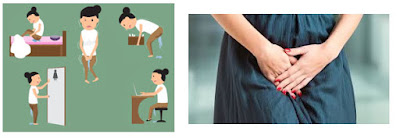
Urinary Prolapse - Altius Hospital

Image
What is a prolapse uterus? The uterus, or womb, is a muscular structure that's held in place by pelvic muscles and ligaments. If these muscles or ligaments stretch or become weak, they're no longer able to support the uterus, causing prolapse. Uterine prolapse occurs when the uterus sags or slips from its normal position and into the vagina, or birth canal. Uterine prolapse may be incomplete or complete. An incomplete prolapse occurs when the uterus is only partly sagging into the vagina. A complete prolapse describes a situation in which the uterus falls so far down that some tissue rests outside of the vagina. WHAT ARE THE POSSIBLE Risk factors for uterine prolapse? The risk of having a prolapsed uterus increases as a woman ages and her estrogen levels decrease. Estrogen is the hormone that helps keep the pelvic muscles strong. Damages to pelvic muscles and tissues during pregnancy and childbirth may also lead to prolapse. Women who've had more than ...

Family Planning Methods - Altius Hospital

Image
Contraception (anti-conception medication) avoids pregnancy by meddling with the ordinary procedure of ovulation, treatment, and implantation. There are various types of anti-conception medication that demonstration at various focuses in the process. NO SINGLE METHOD IS APPLICABLE TO ALL. What are Contraceptive inserts and infusions?   Hormonal contraception for ladies is accessible as inserts and infusions. These strategies, especially the embed, are more viable than prophylactic pills and rings, yet like other preventative techniques, may cause symptoms and don't give assurance from Sexually transmitted diseases.  Inserts   The prophylactic embed . is a hormonal, pole molded gadget that is embedded under the skin at the internal side of the upper arm. .it has a hormone that stops ovulation and makes the liquid at the opening to the uterus (belly) thicker, preventing sperm from overcoming.  The prophylactic embed goes on for a long time, is...

Laprascopic Tubal Ligation Treatment

Image
Sterilization is any of a number of medical techniques that intentionally leave a person unable to reproduce. It is a method of birth control.. Sterilization methods include both surgical and non-surgical, and exist for both males and females. Sterilization procedures are intended to be permanent. What is sterilization by laparoscopy? Sterilization by laparoscopy is a common procedure used to perform tubal ligation in women. Tubal ligation is a method of sterilization that involves obstruction of the Fallopian tubes. Laparoscopy enables the surgeon to complete tubal ligation by making a small incision near the navel. This smaller incision reduces recovery time after surgery and the risk of complications. In most cases, the woman can leave the hospital within hours after laparoscopy. WHEN TO CHOOSE STERILIZATION? A woman should carefully weigh her decision to undergo sterilization .Though this procedure has been successfully reversed in some women, in almost all...

Pelvic Organ Prolapse Treatment

Image
What is IVF? In vitro fertilisation (IVF) literally means ‘fertilisation in glass’ giving us the familiar term ‘test tube baby’. During the IVF process, eggs are removed from the ovaries and fertilised with sperm in the laboratory. The fertilised egg (embryo) is later placed in the woman’s womb. Is IVF for me? A clinic may recommend IVF as your best treatment option if: You have been diagnosed with unexplained infertility Your fallopian tubes are blocked You have been unsuccessful with other techniques like using fertility drugs or intrauterine insemination (IUI) There is a minor degree of male subfertility - more severe problems are treated with intra-cytoplasmic sperm injection (ICSI). How does IVF work? IVF techniques can differ from clinic to clinic, often depending on your individual circumstances. A typical treatment may involve: For Women:     Step 1: Suppressing the natural monthly hormone cycle As a first step you may be given a drug to suppress your...

Vaginoplasty in Bangalore

Image
Altius Hospital is one of the India’s best leading centres with Gynaec Laparoscopic surgery, Infertility & Urogynaecology treatments. It is a 50 Bedded Hospital with High Tech State of the art speciality centre. Our Hospital is renowned as the Third Operation Theatre in the country and to have OR1 system first in Karnataka. Vaginal Discharge Vaginal discharge is most often a normal and regular occurrence. However, there are certain types of discharge that can indicate an infection. Abnormal discharge may be yellow or green, chunky in consistency, or have a foul odor. Vaginal discharge serves an important housekeeping function in the female reproductive system. Fluid made by glands inside the vagina and cervix carries away dead cells and bacteria. This keeps the vagina clean and helps prevent infection. What is Normal? Women develop PID when certain bacteria, such as chlamydia or gonorrhea, move upward from a woman's vagina or cervix into her reproductive organs. P...

Fibroids Surgery in Bangalore

Image
Treatment for fibroids can range from no treatment at all to surgery. Unless fibroids are causing excessive bleeding, discomfort or bladder problems, treatment usually isn't necessary. If you have fibroids, you should be evaluated periodically to review symptoms, and to monitor the fibroid and uterus size with abdominal and pelvic examinations. If you don't have symptoms, routine pelvic ultrasounds have very little benefit. Fibroids are likely to grow each year until menopause, but this isn't an indication that you need treatment, unless the change is accompanied by disabling symptoms. Types of fibroid surgery There are three types of fibroid procedures. Which one you have depends on: the size of your fibroids the number of fibroids you have where in your uterus they’re located whether you want to have children Open Surgery - Myomectomy and Hysterectomy Myomectomy and Hysterectomy: Surgical Treatments for Uterine Fibroids Myomectomy is a surgery to remove fibroid...

Cystoscopy Procedure Hospital in Bangalore

Image
Cystoscopy (sis-TOS-kuh-pee) is a procedure used to see inside your urinary bladder and urethra — the tube that carries urine from your bladder to the outside of your body. During a cystoscopy procedure, your doctor uses a hollow tube (cystoscope) equipped with a lens to carefully examine the lining of your bladder and your urethra. The cystoscope is inserted into your urethra and slowly advanced into your bladder. Areas that can be examined include: Urethra or urinary channel, which includes the prostate in men Bladder, which collects and stores urine The 2 ureters, which are small internal tubes that conduct the urine made by each kidney into the bladder A urologic surgeon, or urologist, performs cystoscopy. The procedure involves looking at the urinary tract from the inside. Abnormalities can be detected in this manner, and surgical procedures can be performed. You would commonly have cystoscopy for the evaluation of blood in the urine. There are many other indications ...

High Risk Pregnancy Treatments in Bangalore

Image
Treatment for a woman whose pregnancy is high risk because she is HIV positive would involve antiretroviral treatments during pregnancy, possibly a surgical delivery, and additional medications for her and the baby after birth. For the vast majority of women, pregnancy follows a routine course. Some women, however, have medical difficulties related to their health or the health of their baby. These women experience what is called a high-risk pregnancy. High-risk complications occur in only 6 percent to 8 percent of all pregnancies. These complications can be serious and require special care to ensure the best possible outcome. While some problems are unavoidable, Altius perinatologists – obstetricians with special training and board certification in high-risk pregnancy care – work to minimize complications and help you achieve the healthiest pregnancy possible. Diagnosis : High risk pregnancies can be diagnosed in a number of ways by a medical practitioner. The below test...

Pelvic Floor Dysfunction Treatment in Bangalore

Image
Pelvic floor dysfunction is the inability to correctly tighten and relax the pelvic floor muscles to have a bowel movement. Symptoms include constipation, urine or stool leakage and a frequent need to urinate. Treatments include biofeedback, medication or surgery. What is the pelvic floor? Both men and women have a pelvic floor. In women, the pelvic floor is the muscles, ligaments, connective tissues and nerves that support the bladder, uterus, vagina and rectum and help these pelvic organs function. In men, the pelvic floor includes the muscles, tissues and nerves that support the bladder, rectum and other pelvic organs. The pelvic floor muscles stretch like a muscular trampoline from the tailbone (coccyx) to the pubic bone (front to back) and from one sitting bone to the other sitting bone (side to side). These muscles are normally firm and thick. Just like a trampoline, the pelvic floor is able to move down and up. The bowel, bladder and uterus (for women) lie on the pe...